River coarse fishing is a moving-water game. The fish are wild, the swims change with the level, and half the skill lies in reading the current before you tie anything on. The good news is that it needn't be complicated or expensive: a rod licence, a day ticket and a modest rod-and-reel set-up will get you fishing this weekend. What follows is the practical order of things — licence and permission, tackle, watercraft, and the bank-side manners that keep you welcome on a stretch.
Licence first, permission second
Anyone aged 13 or over needs a rod licence to fish for freshwater fish in England and Wales, coarse fish included. Under-13s don't need one, and 13- to 16-year-olds can apply for a free licence. Buy yours direct from the Environment Agency or Natural Resources Wales, or from a Post Office, and carry it with you — bailiffs do check. A standard trout-and-coarse licence covers two rods at once; take a second licence if you want to fish three or four rods.
A licence is not permission to fish. It funds fisheries work and enforcement, but it doesn't give you a single yard of bank. You still need a club permit or a day ticket from whoever holds the fishing rights. In Scotland there is no rod licence system, but permission matters just as much.
Read the byelaws for your water before you go. On rivers in England, the coarse-fish close season runs from 15 March to 15 June, and the arrangements in Wales, Scotland, canals and stillwaters differ, with individual fisheries adding their own rules on top. If in doubt, ask the club or your local tackle shop. A two-minute question saves a wasted journey.
A simple set-up that catches on most rivers
You don't need a van full of gear. A single versatile outfit will handle chub, roach, dace, perch and the occasional bonus barbel:
- Rod: a 12ft to 13ft float rod, or a 10ft to 11ft feeder rod if you prefer fishing on the bottom.
- Reel: a small fixed-spool reel, around 2500 to 3000 size, loaded with 4lb to 6lb line.
- Hooks: barbless or microbarbed, sizes 16 down to 12, tied to a hooklength a little lighter than your main line.
- Floats and shot: a few stick floats and small wagglers, plus a dispenser of split shot.
- End tackle: a disgorger, forceps, a soft-mesh landing net and an unhooking mat.
- Bait: maggots and casters, sweetcorn, luncheon meat, pellets, bread and hemp.
- Comfort: a chair or seat box and a bag you can carry comfortably along the bank.
Buy one decent rod rather than three cheap ones, and spend the rest on bait and petrol. Club membership usually works out cheaper than a string of day tickets and brings access to miles of water, plus the advice of people who fish it every week.
How to read a river
Water is never uniform. Fast water carries food; slow water holds fish. The trick is finding the seam between them — the crease — where the current eases at the edge of a faster run. Fish sit in that softer water, inches from the flow, picking off whatever drifts past, and they almost always face upstream.
Worth looking for on any new stretch:
- A crease below a riffle, where the pace changes.
- Slacks behind a bush, bridge pier or fallen tree.
- Undercut banks, especially on the outside of a bend.
- Weedbeds and gravel runs, which hold insects and small fish.
- Weirpools and the tail of a pool, which fish move into after rain.
Depth and colour matter too. A coloured river after rain often fishes best close in, where fish can feed without fighting the flow. Clear, low water pushes them into deeper, shaded lies and makes them shy.
Two tactics cover most days
Trotting a float
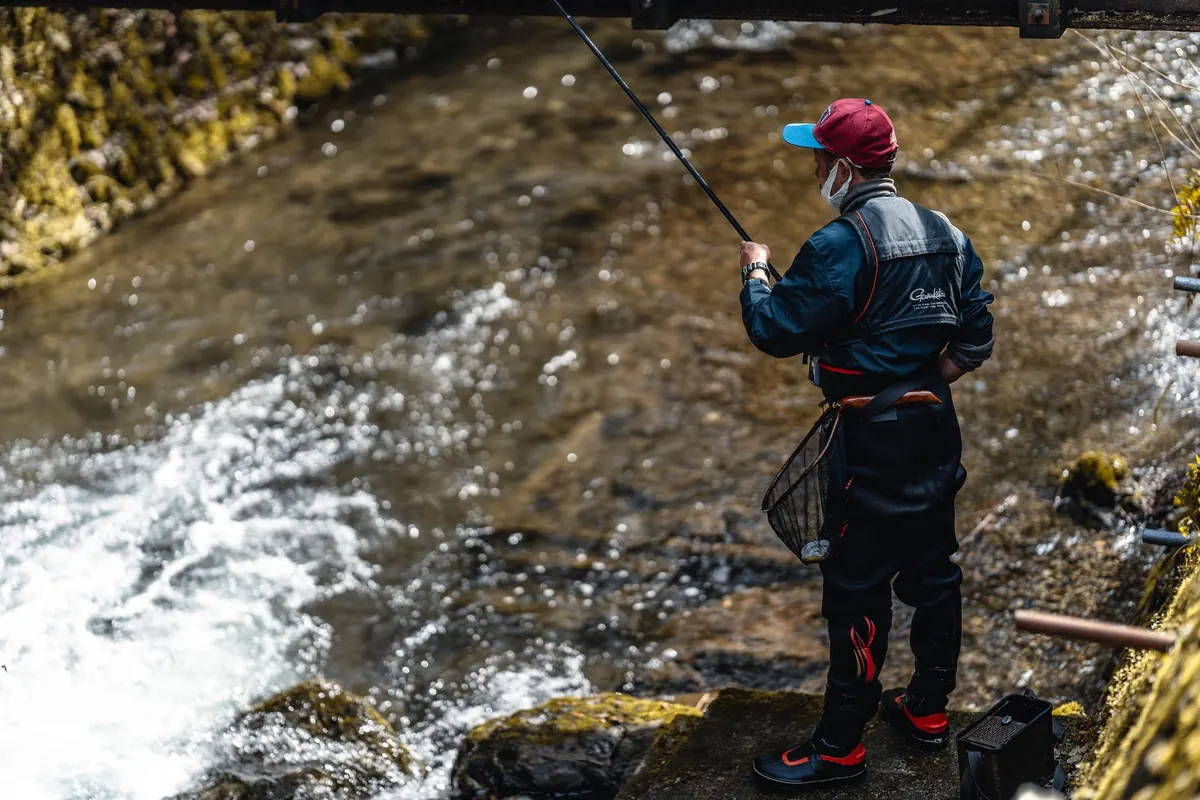
Plumb the depth with a heavy float or plummet, then set your float so the bait travels just off the bottom. Cast upstream and let it run down at the pace of the current, holding back gently so the hookbait lifts and slows. Feed a few maggots every cast, slightly upstream of the float. Bites show as a dip, a hold-down, or the float sailing under.
The feeder or leger
Cast a small feeder or lead upstream and let it settle. Watch the quiver tip: a steady pull round, or a run of sharp knocks, means something has picked up the bait. Feed little and often rather than emptying a bucket into the swim — on a river, loose feed that drifts downstream is doing your job for you.
Bank-side etiquette
Anglers are, on the whole, a friendly lot, and the rules are mostly common sense.
- Ask before setting up close to someone. If they're trotting a float through a run, fishing into it ruins their session.
- Don't walk through another angler's swim. Use the path behind rather than the water's edge.
- Keep the noise down. Slamming car doors and shouting carry a long way on a quiet river.
- Take everything home. Line, hooks, bait bags and cigarette ends all harm wildlife; discarded line tangles swans and birds.
- Close gates and park considerately. Never block a farm track or a gateway.
- Lend a hand. Netting someone's fish, holding a gate or passing a disgorger takes seconds and costs nothing.
If a bailiff or club official asks to see your licence and ticket, show it without fuss. They are protecting the water you're fishing.
Handle fish properly, and keep yourself safe
Unhook over wet grass or an unhooking mat, wet your hands first, and never squeeze a fish. Support it along the body, use a soft net, and return it gently, head-first into the flow. Keep it out of the water only long enough to unhook it and,
Photo: Morket / Pixabay