The same stretch of river can look almost empty in one month and crowded with life in the next. A chalk stream in late May is a different place from that same water in mid-October: the first fizzes with mayfly and rising trout, the second turns dark silver as salmon settle onto the gravels to spawn. Watching a river through a full year, rather than dipping in for the occasional visit, is the quickest way to learn it.
What follows is a rough calendar for birdwatchers and naturalists. Everything shifts with latitude, altitude and weather, so treat it as a prompt rather than a timetable — and keep a note of what you see on your own local stretch, because that record is worth more than any generic list.
Winter: January and February
On slow lowland rivers, winter is the season of diving ducks. Goosander and goldeneye arrive from further north and work the deeper, quieter reaches; numbers often build through January and peak in February. Look upstream of weirs, where fish are concentrated, and check gravel spits for loafing goosander, which show white and grey at distance.
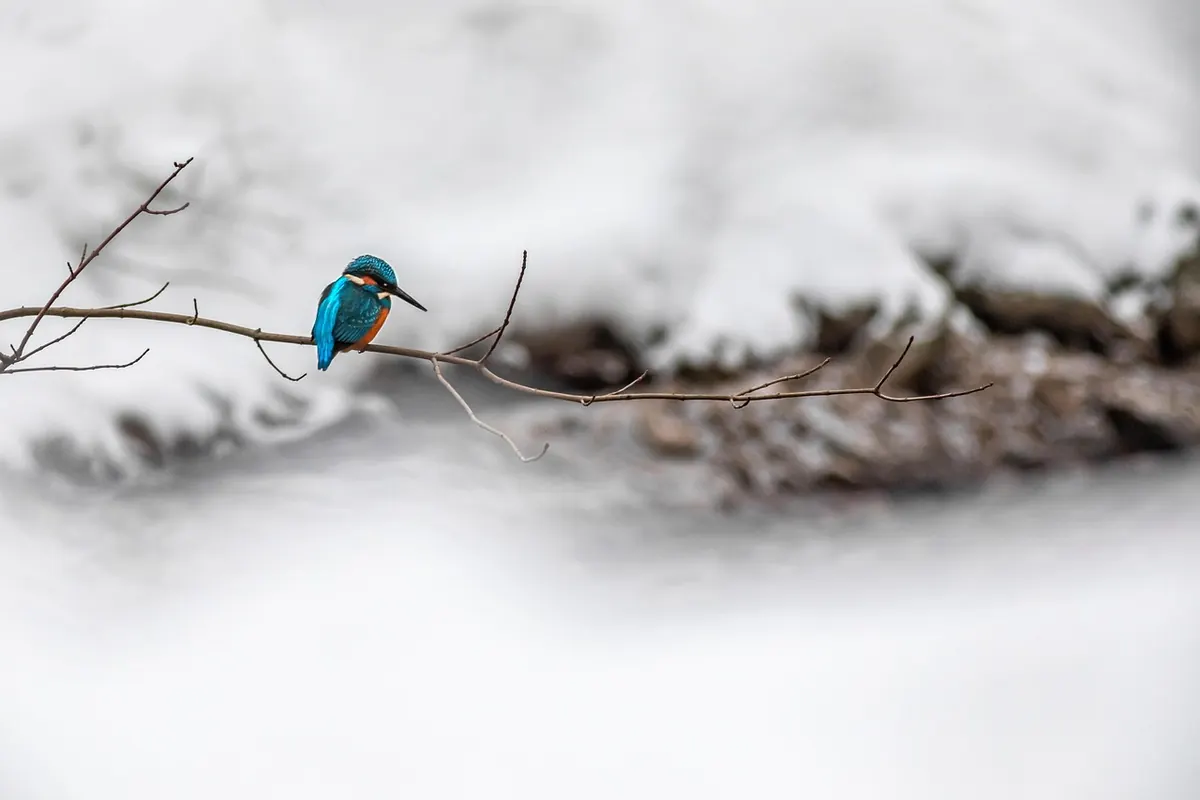
Dippers are the other January fixture. They hold territory and sing right through the winter, so a brisk warbling song from a mid-stream boulder is often the first hint that the season is turning. Grey wagtails work the weir sills, and kingfishers pair up in late winter — though in a hard frost they can vanish from a stretch entirely and reappear further downstream.
Otters are more often seen by day at this time of year, partly because bankside vegetation has died back and partly because fish are harder to catch. Check under bridges and on prominent boulders for spraint: dark, loose and unmistakably full of fish bones and scales.
Spring: March to May
March brings the arrivals. Sand martins turn up in mid-month and go straight to eroding sand cliffs and the drainage pipes in bridge abutments where they nest; a colony is usually heard before it is seen. Chiffchaffs sing from the first mild days, willow warblers follow, and pike push into flooded margins to spawn, sometimes with enough commotion to give away the spot.
April and May are the busiest months for nesting. Grey wagtails and dippers tuck nests into stonework and bankside walls, mute swans and moorhens escort young along the quieter edges, and reed and sedge warblers sing from the marginal growth.
The mayfly weeks
On chalk streams, late April into early June is the main event of the year. Mayfly duns hatch through the afternoon, trout switch on, and spinners dance above the water at dusk. Swifts, swallows and house martins feed over the hatch, and the first banded demoiselles and large red damselflies appear along the banks. If you only visit one river one time this year, make it a chalk stream on a warm evening in late May.
Early Summer: June and July
June is the month for broods. Goosanders ride the current with long lines of ducklings, dippers and grey wagtails carry food to nests in bridge stonework, and dragonflies — emperor, four-spotted chaser, southern hawker — begin patrolling their stretches. Water voles, where they survive, give themselves away with a sharp plop and a bow wave.
By July many rivers are low and clear, which makes them easier to read. Shoals of chub, dace and roach hold in the deeper pools, and southbound waders start to appear: common sandpipers bobbing along the shingle, green sandpipers on muddy side channels, little ringed plovers on exposed gravel. This is the point in the year when a pair of binoculars and a bit of patience beat walking a long distance.
Late Summer into Autumn: August to October
August feels quiet, then suddenly doesn't. Swallow and sand martin flocks gather over the water, and ospreys pass through on migration — a fishing osprey over a river is worth rearranging a day for. Look for the hovering pause, the dive, and the heavy climb away with a fish held head-first.
September and October belong to the fish. Atlantic salmon and sea trout move upriver, and by late October and into November they cut redds in clean gravel, sometimes in water shallow enough to watch from a bridge. Watch from a bank or bridge and keep your distance: walking across spawning gravels can destroy eggs that are already in the voids beneath your boots.
Wigeon, teal and other wildfowl arrive through October, and redwings and fieldfares strip the berries from riverside hedgerows.
November and December: Wildfowl and Hard Weather
Goosander and goldeneye return in force, tufted duck gather on wider, slower reaches, and whooper swans appear on some rivers, mostly in the north and east. Cold snaps concentrate birds on the stretches that stay open — below weirs, at outfalls, on tidal sections — which is exactly when a kingfisher becomes findable again after a quiet autumn. Jack snipe and water pipits turn up in wet margins and around weir sills.
By late December the dippers are singing again. The year closes where it opened.
Watching Well: A Few Practical Habits
- Check the river level before you go. Rain falling upstream can bring a spate through hours later, and a river that looks calm at the bridge can be out of its banks two fields up. Never walk into flood water.
- Stay on the bank. Use bridges and high ground for views of spawning fish, and keep well back from nests, gravel bars and bankside burrows.
- Arrive early, then stop moving. Give the river ten quiet minutes to settle before you start scanning; most of the good sightings come after that pause.
- Learn one stretch properly. Knowing which weir holds goldeneye in February, where the sand martins nest and which pool the goosander broods use is worth more than touring widely.
- Record what you see. Local records centres, BirdTrack and iRecord all welcome river sightings, and your notes help build a picture of how these stretches are changing.
Take binoculars, a notebook and a warm layer, and go out in weather you would not otherwise choose. Rivers reward people who turn up in the rain, in the frost and in the flat grey weeks in between. A year on one river is long enough to notice the patterns — and short enough to start again next January.
Photo: Erik_Karits / Pixabay